The Matching Pot Trap: Why Every Container Need Not Be the Same
A container garden feels coherent without matching pots. Use a repeated color, shape, or material to connect varied containers and let each plant stand out.
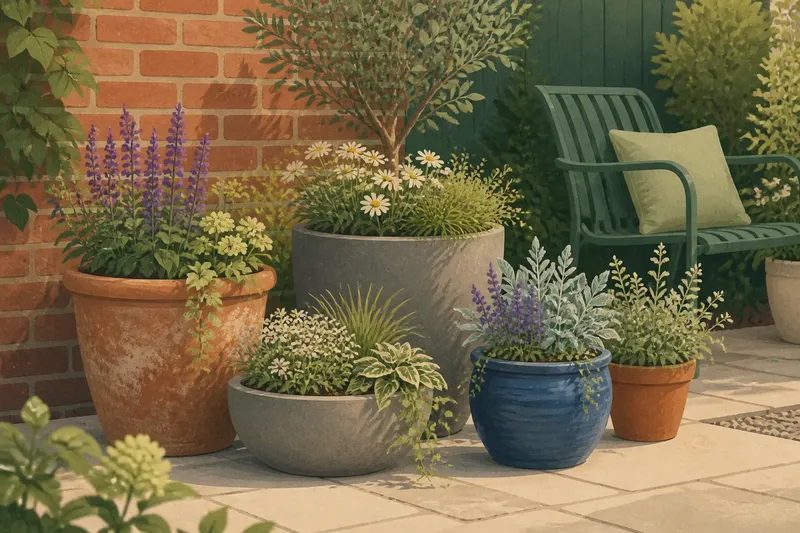
Do all the pots in a container garden need to match? No. A repeated color, shape, or material can make different containers feel related, while varied sizes and finishes keep the arrangement from looking like a row of identical props. A container garden works through a small, deliberate echo, not a matching set.
Choose one connection
Start with what is already fixed: patio paving, a painted fence, a bench, or the foliage and flowers you plan to grow. Choose one feature to repeat, such as the warm red of a brick wall, the muted green of a metal chair, a rounded silhouette, or the rough surface of terracotta.
Let the other features vary. If every pot repeats the same color, size, shape, and finish, the containers become the main event. One shared trait is usually enough to tie an assortment together.
- Color: If the garden already has a clear palette, repeat one of its colors; otherwise, use a restrained neutral to connect contrasting pots.
- Shape: If plant colors change through the season, repeat rounded rims or straight sides; otherwise, let the containers’ silhouettes vary.
- Material: If texture matters more than hue, repeat terracotta or wood; otherwise, choose finishes that sit comfortably beside the surrounding surfaces.
Arrange what you own
Gather the containers you already have, including nursery pots that can sit inside more decorative outer pots. Group them loosely by color, shape, material, and visual weight. This makes recurring features easy to spot and can prevent buying another container simply because it resembles the last one.
Place the pots where you intend to keep them, leaving room to reach each plant for watering and ordinary care. Try a large container with smaller companions, or form a loose cluster instead of a straight line. Step back to the usual viewing point: if the assortment feels disconnected, move a repeated color or material into view; if it looks too uniform, vary the spacing or remove one of the repeated pieces.
Consider how the grouping will look when flowers fade or foliage changes. The container’s color and texture remain visible after a bloom has passed, so a quieter pot palette can accommodate seasonal planting without making each change feel like a redesign.
Check the practical fit
Visual variety does not excuse a poor container choice. Check that each pot has suitable drainage and room for its plant, using the plant label and container maker’s instructions to guide those decisions. Unglazed terracotta, glazed ceramic, plastic, metal, and wood differ in appearance and handling; some filled containers may be cumbersome to move, while others may be poorly suited to an exposed location.
- If a pot has no drainage opening, use it as an outer cachepot or choose another container for direct planting.
- If the plant’s needs call for more root room, select a more suitable size rather than keeping the pot for its appearance.
- If a filled container would be difficult to move in its intended location, choose a lighter option or settle it where it can remain.
- If wind or exposure is a concern, choose a container and placement suited to the site instead of relying on looks alone.
- If the grouping blocks a faucet or makes a plant hard to reach, revise the spacing before settling the arrangement.
- If frequently tended plants are tucked behind larger pots, move them forward or leave a clear access route.
Questions about pot choices?
Can different pot materials go together?
Yes. A shared color, silhouette, or surface texture can link terracotta, ceramic, and other finishes without making them identical. Group a few materials deliberately rather than introducing a new finish with every pot.
How many colors should the pots use?
There is no fixed count. One recurring color gives the eye a clear connection, while neutral pots or a restrained contrast can work alongside flowers that already bring several colors.
Should plant pots match the house?
They can echo the house without copying it. A dark rim that relates to a window frame or terracotta beside brick creates a quiet connection while leaving pot sizes and finishes free to differ.
What if my pots already look mismatched?
Group them by size and visual weight, then look for a color, shape, or material that appears more than once. If none repeats, use plant placement to make the grouping feel deliberate or add a container that bridges the existing colors.
Read the whole grouping
Imagine you have a weathered terracotta pot, a broad gray planter, and a small blue glazed container, with a brick wall behind them. You place the terracotta and gray pots near the wall, then set the blue one beside a plant with cool-toned foliage. The brick and terracotta provide a warm link; the blue pot remains an accent. The expected visible result is a varied collection that relates to its setting without forming a row of near-identical pots.
Before adding another container, ask what role the grouping lacks: a low shape, a quieter finish, or a repeated color. That question keeps a container garden coherent and gives each pot a reason to be there.