A Late-Autumn Garden Tidy That Leaves Room for Wildlife
A late-autumn garden tidy clears hazards and problem debris while keeping useful winter cover, helping you prepare the garden without stripping it bare.
What needs doing in a late-autumn garden tidy, and what can wait? A late-autumn garden tidy is mainly a matter of deciding what is unsafe or likely to cause trouble, then leaving sound material that still offers food or shelter. You do not need to make every bed look newly raked.
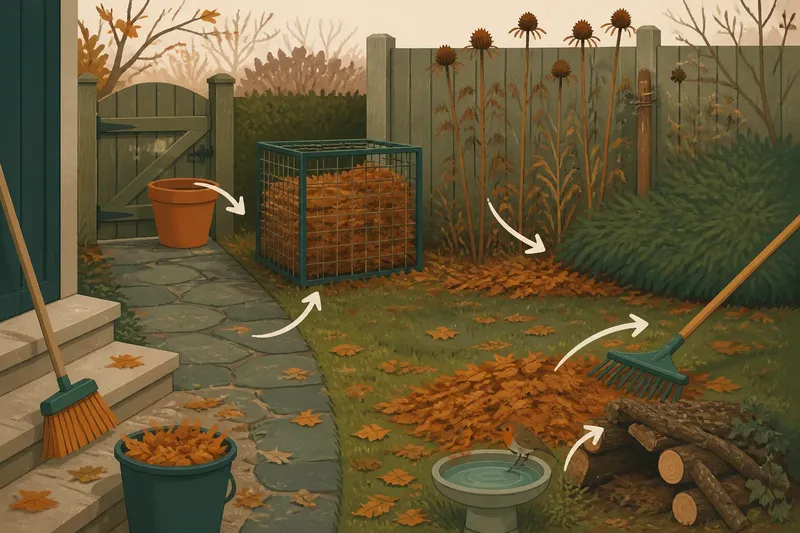
Walk the garden once before picking up tools. Check paths, drains, ponds, lawns, and standing stems, and decide what each needs. A hand broom is useful on steps; a rake or leaf scoop can move larger piles without scattering them across the next patch of ground.
Clear access routes
Remove wet leaves from steps, narrow paths, and the route to a shed or gate. Move fallen branches that could trip someone or damage nearby plants. Keep sound leaves for a compost bin, leaf cage, or sheltered patch beneath shrubs.
Look for loose stakes, sharp supports, unstable pots, and hoses left across walkways. If an item is still useful, store it securely; if it is damaged, remove it from the route rather than leaving it half-hidden under leaves.
Say the path to your shed is covered in wet leaves, while a dry layer sits beneath a hedge. Sweep the path leaves into a bucket and place them under the hedge. The route is clearer, and the undisturbed leaves remain where they can break down as ground cover.
Keep sound stems
Healthy seed heads on plants such as teasel, echinacea, and ornamental grasses can feed birds and give insects places to shelter. Leave them standing where they are stable and do not obstruct access. Remove heads that fall onto paving, block a gate, or spread a plant into a spot where you do not want it.
Cut back stems that are broken, collapsing, or clearly diseased. Keep affected material separate from healthy garden debris, and follow local disposal guidance or product-label directions if treatment has been used. For plants with particular pruning needs, consult the plant label or a qualified local horticultural professional rather than applying a blanket autumn rule.
If tall stems might fall into a path, tie them loosely to a sturdy support with soft garden twine. The tie should steady the plant without constricting living stems. Healthy standing growth can often wait until spring, when new growth makes the pruning decision clearer.
Move leaves selectively
Clear leaves from drains, pond surfaces, greenhouse glass, and lawns where a thick, wet layer is building up. A loose scatter beneath shrubs or trees can stay in place; a dense mat over grass is better raked away. Keep leaves clear of vents, doorways, and the crowns of low plants.
Choose a contained spot for the leaves you collect. A compost bin or wire-mesh leaf cage keeps the material manageable, while a quiet corner beneath shrubs may suit a smaller, loose pile. Avoid adding diseased leaves or material from treated plants to shared compost unless the relevant guidance says it is suitable.
On a pond, lift out excess leaves before they sink, but do not rake away every bit of healthy marginal growth. If the pond has a pump or other equipment, use the manufacturer’s winter-care instructions.
Leave shelter undisturbed
Check around log piles, dense evergreen cover, and gaps beneath fences without taking them apart. Remove litter or an obvious hazard nearby, but leave stable shelter in place. Avoid shifting a pile simply to make the edge look neater.
Keep bird baths and water bowls accessible and clear of fallen debris. A shallow dish with a stable base is easier to maintain than a deep container with steep sides. Place it where you can refresh it without trampling through a planted bed.
Questions about autumn tidying?
Should I cut back every perennial in autumn?
No. Leave healthy stems and seed heads where they provide cover or food and are not in the way. Remove unsafe or diseased material, and check individual plant-care guidance for pruning needs.
Can fallen leaves stay on the lawn?
A few scattered leaves can remain, but rake away a thick, wet layer that covers the grass. Reuse sound leaves beneath shrubs or in a leaf cage.
When should I cut standing stems?
For many healthy perennials, waiting until spring lets stems remain as winter cover and makes new growth easier to see. Follow specific care instructions when a plant needs different timing.
What should I remove before winter?
Clear debris that blocks access, covers drains, threatens to fall, or is clearly diseased. Leave sound stems and stable shelter where they do not create a practical problem.
Use a short decision list
Before putting tools away, use these checks to decide what stays and what moves. Each result points to a concrete next action.
- Observation: Wet leaves cover steps or a frequently used path. If they make the surface slippery, sweep them into a bucket and move them to a suitable leaf pile; otherwise, leave scattered leaves undisturbed.
- Observation: Leaves cover a drain or pond surface. If they could block drainage or sink into the pond, remove the excess and place sound leaves in a leaf cage; otherwise, leave healthy marginal plants alone.
- Observation: A lawn has a thick, wet layer of leaves. If grass is hidden beneath it, rake the leaves away and reuse them under shrubs; otherwise, leave a light scatter in place.
- Observation: A stem is broken, diseased, or leaning into a route. If it presents a hazard or clear plant-health concern, cut or remove it and keep affected material separate; otherwise, leave sound stems standing.
- Observation: Seed heads are stable and do not block access. If they remain in place, leave them for winter food and structure; if they fall across paving or a gate, remove only the obstructing heads.
- Observation: A pot, stake, or hose is loose or across a walkway. If it can tip or trip someone, move or secure it; otherwise, leave it where it is stable and out of the way.
- Observation: A log pile or fence gap offers stable shelter. If it is clear of immediate hazards, leave it undisturbed; if litter nearby creates a problem, remove the litter without dismantling the shelter.
Imagine your small garden has wet leaves across the back step, a thick layer on one patch of lawn, healthy echinacea stems beside the fence, and a loose pot near the gate. First, sweep the step clear and carry those leaves to a wire cage. Next, rake the lawn patch and put its sound leaves beneath a shrub. Leave the echinacea standing because it is stable and does not block access, then move the pot to firm ground away from the gate. The resulting decision is simple: clear the hazards, retain useful cover, and defer routine cutting until spring.
Write deferred jobs beside their locations, such as “check the grasses near the gate in spring.” That note is more useful than “tidy border,” which leaves the job’s scope open to interpretation. Put the rake away, check the route once more, and stop when access is safe and the remaining material is sound.